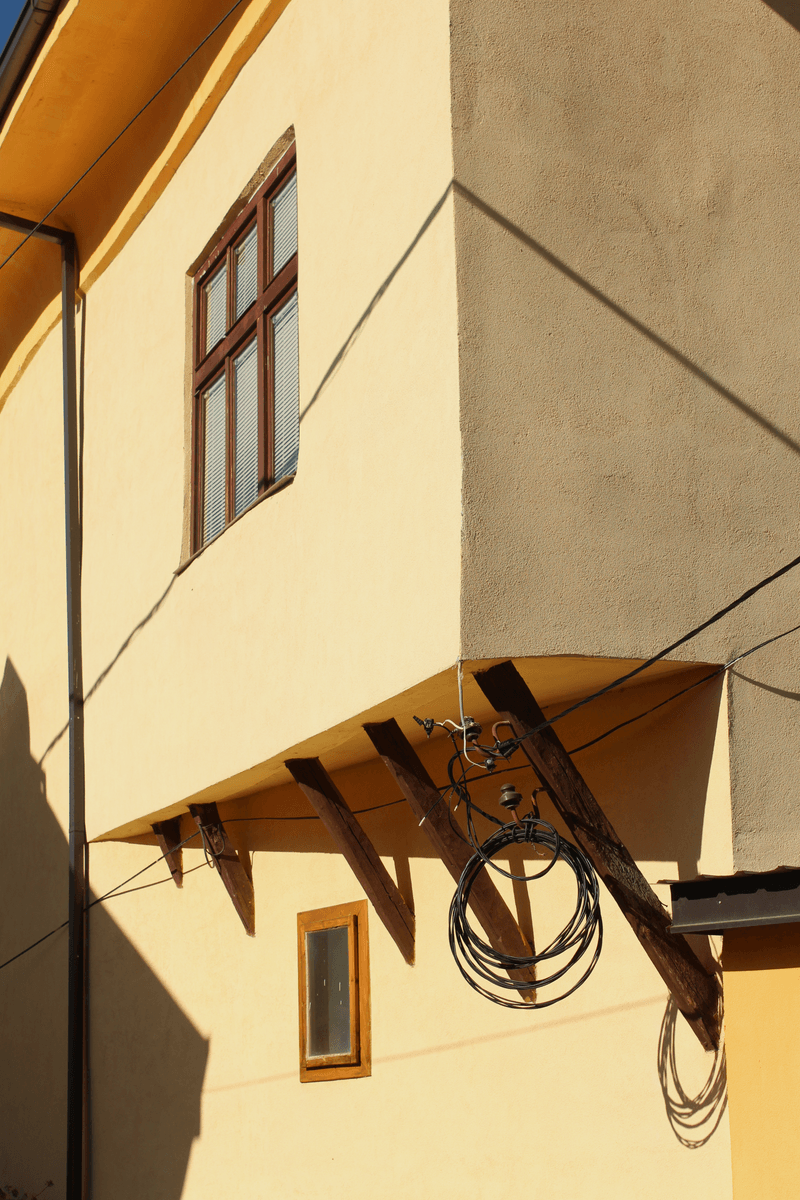
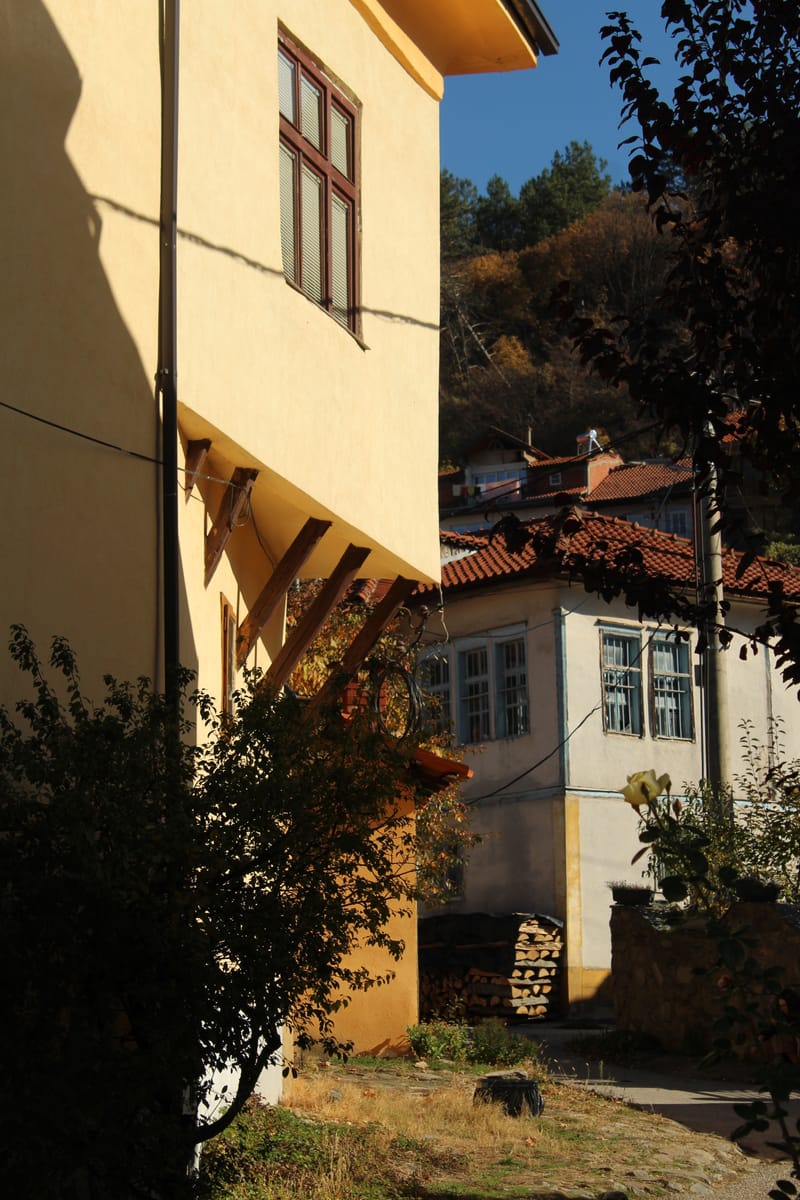
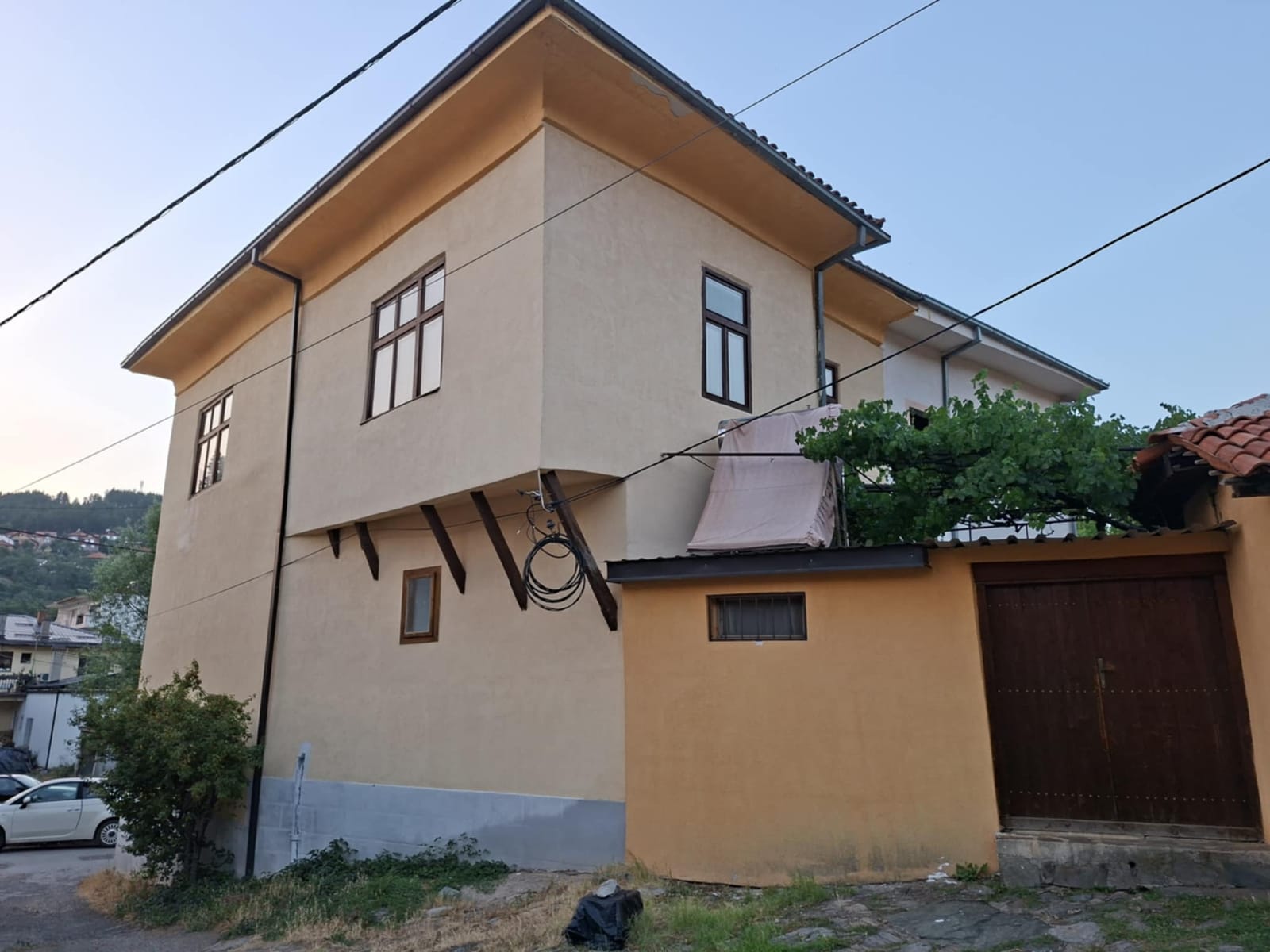
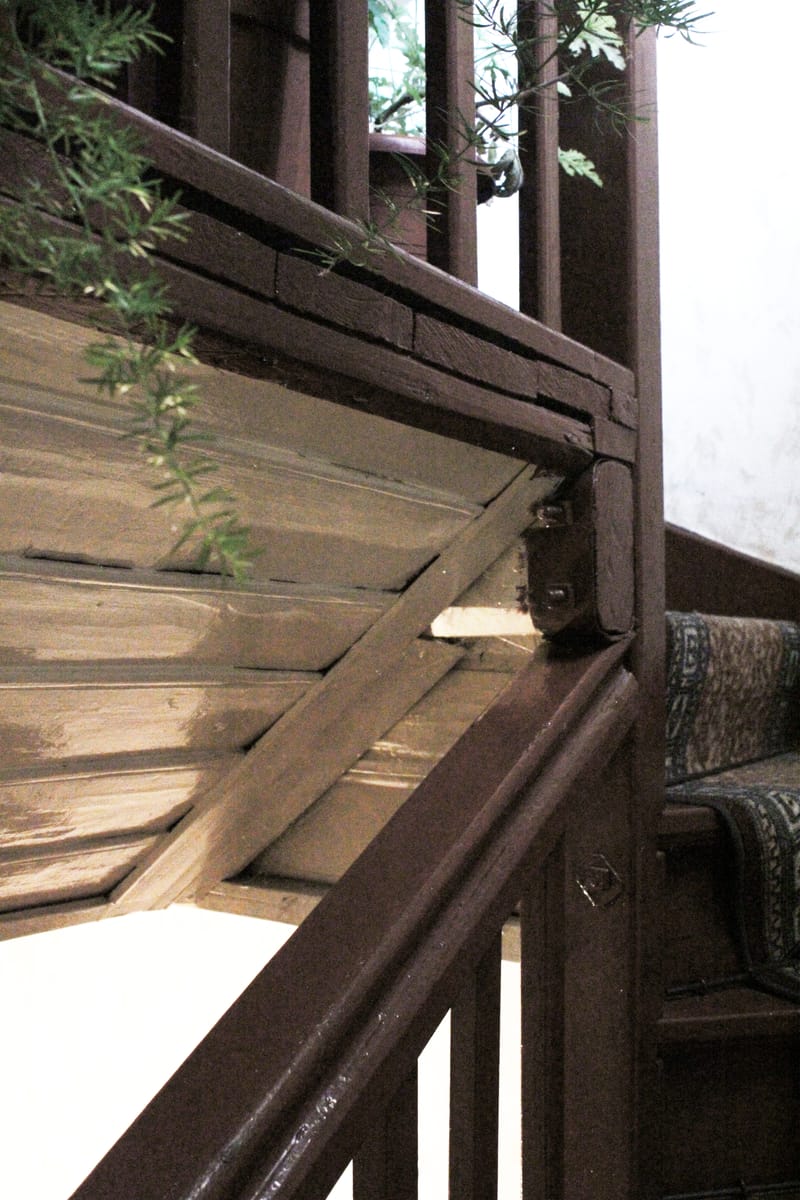
The Popgyorgina House is the best-preserved among the old urban houses of the town. Built of adobe brick (kerpich) and timber, it has retained its authentic appearance inside and out: high ceilings, built-in minderlak seating, wooden stairs, a domestic iconostasis, and a courtyard with a wooden gate. On the second floor are the bedrooms with nineteenth- and early-twentieth-century furniture and hand-knitted curtains made by Lyubinka Mladenova – evidence that beauty was lived in here every day, not only for guests.
The house is also a family wellspring of artistic tradition: the academic painter Dimitar Stoychevski, considered one of the founders of modern painting in the region under European influence, was born in the neighbouring house of the same row – the grandson of the priest Gyorgi, after whom the entire quarter bears its name. This family is also known for making pilgrimages to Jerusalem across several generations, a longstanding family tradition from which they received the prefix "hadzhi". The house has also received distinguished guests, among them Prof. Dr Dimitar Arsov, a relative of the Mladenovi family who obtained his doctorate at the Sorbonne (1936) and is considered the founder of modern internal medicine in the region.
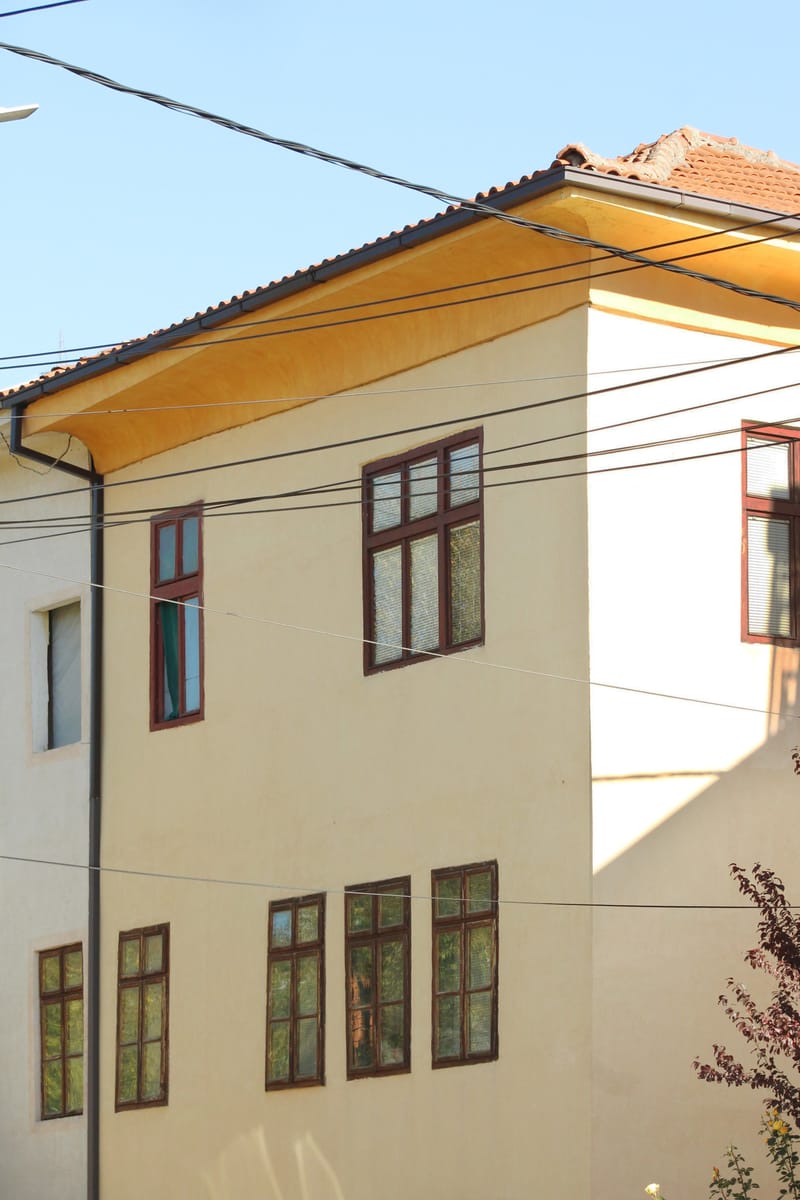
The wooden window construction of the Popgyorgina House – rectangular with pronounced verticality and divided into several smaller glass panes, some with an internal cross-shaped division – can also be found in the Lazarkova and Bogdanova houses in Dupnitsa, as well as in the Popnikolova house in Kyustendil. This feature speaks to an aesthetic and functional element of an older architectural tradition but also to a similar type of construction shared by Balkan houses on both sides of the border.



 The richly decorated Debar ceiling, the work of master carvers from the school, connects this room to the artistic heritage of the region.
 Beneath its roof intertwine stories connected to different fates – of the Turkish bey, of the Orthodox clergyman, of the hatter, and of the academic painter.