
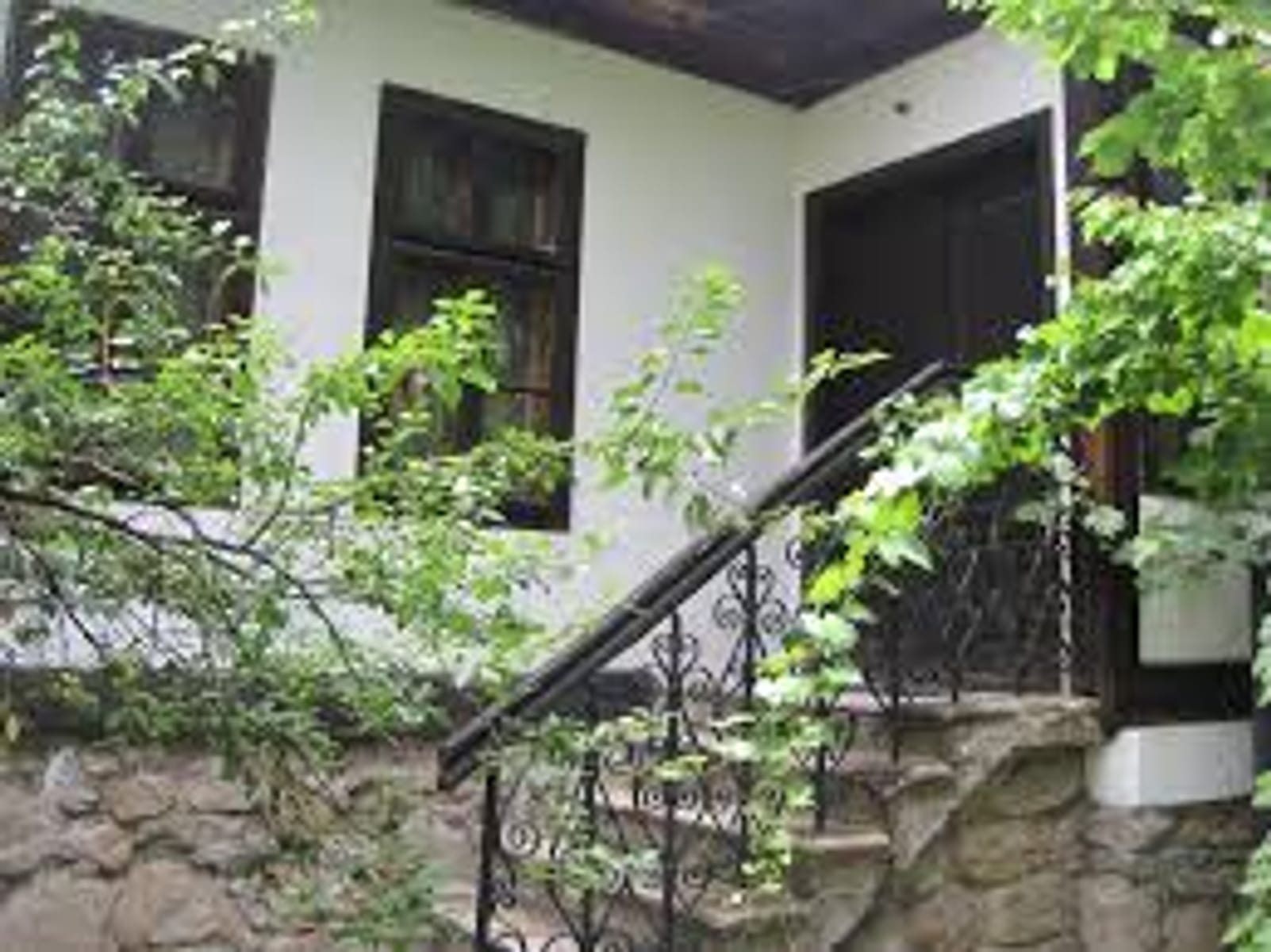
Location: the Lozenets quarter (today 24a Gorotsvetna Street) – a district traditionally inhabited by merchants and craftsmen.
History and Architecture
The house was built in 1874 by Hristo Lazov, a settler from Shtip, a coppersmith and master craftsman of the local guild. It was inherited by his daughter's husband, Nikola Emfiedzhiev, whose trade in snuff tobacco (emfie) gave the building its present name.
Distinctive features:
- Architecture: A single-storey building with a U-shaped plan, semi-sunken cellars, and spacious courtyards enclosed by massive stone walls.
- Interior layout: It comprises a glazed entrance hall, a large guest salon, a smaller salon for afternoon visits, a bedroom, a living room, and a kitchen with a dining area. Heating is provided by dzhamal-type fireplaces. The furnishings reflect urban life of the 1920s and 1930s.
- Historical significance: During the Russo-Turkish War of Liberation, the house served as the headquarters of the 4th Kharkov Uhlan Regiment. The northeastern room is historically known as "Ertel's study" (after Colonel Viktor Ivanovich Ertel).
- Artistic elements: A unique wooden ceiling designed as a stylized celestial vault with images of archangels.